“There’s a line by the Italian writer Carlo Levi that I think is apt here: ‘The future has an ancient heart.’ I love it because it expresses with such grace and economy what is certainly true–that who we become is born of who we most primitively are; that we both know and cannot possibly know what it is we’ve yet to make manifest in our lives.”
Cheryl Strayed (aka Sugar), “The future has an ancient heart,” from the collection titled, Tiny Beautiful Things
I feel like I’ve reached a point in my life where I can look back on where I’ve been and say I’ve learned a bit of something. I know I’m still so young, and there’s so much more to do and learn, but I know I have this tiny bit of wisdom that I think my 20-something self would like to hear. So that’s who I’m writing to, here, the 20-somethings who feel a bit unsure, a bit lost. Just so you know, I’m a bit lost, too, still. But I’ve found more than I ever thought I’d be able to, so I think it’s important I share some of that.
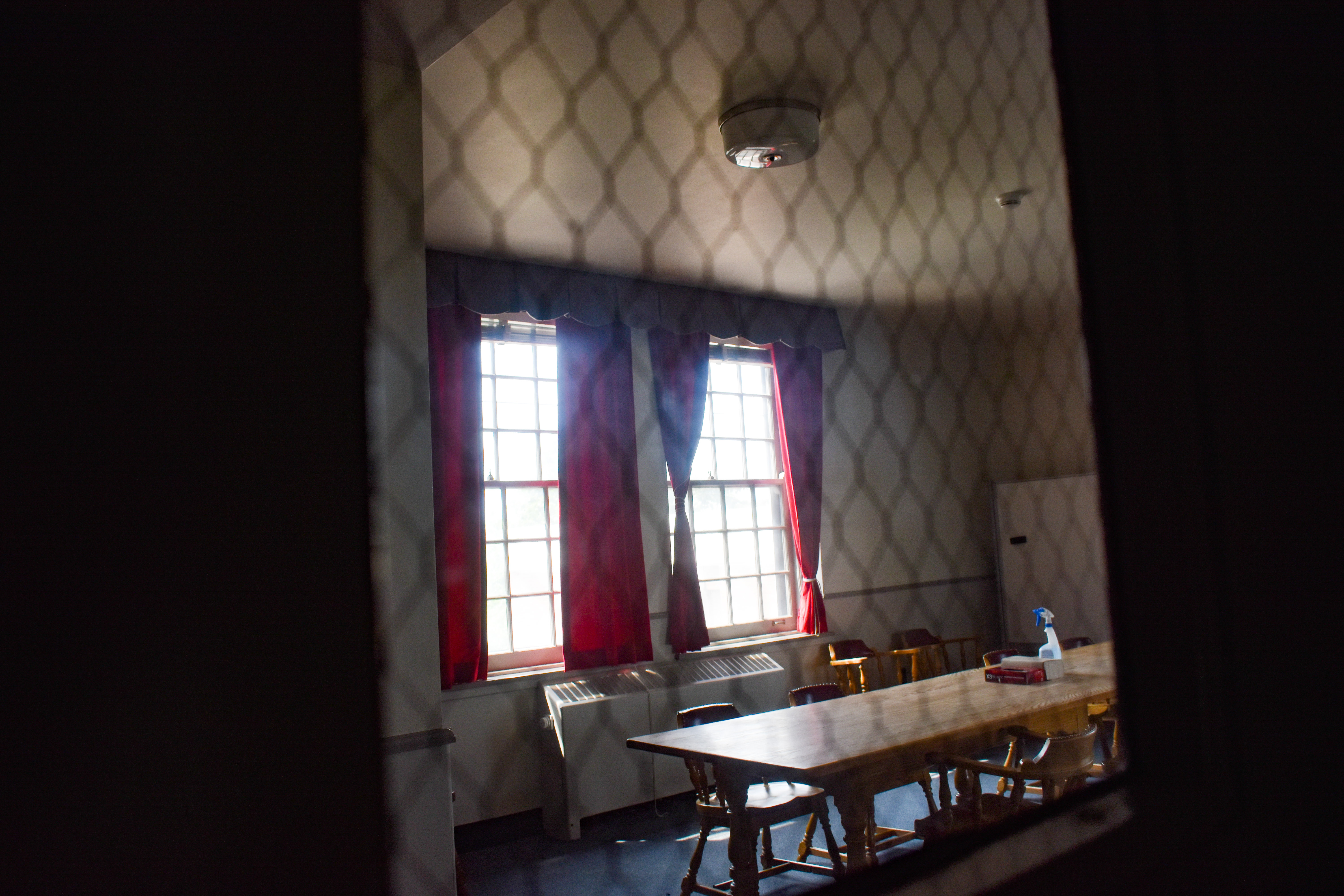
I took the picture at the top of this post on a trip back home last month. I’m lucky to have called many places, “home.” This shot is from just outside a classroom where I took a couple of my favorite college classes. It’s at the top of a tower that you get to by walking up a set of winding stairs. This was probably my favorite classroom in college–though it may have tied with the wood shop in the art building.
The door to the actual classroom was just around the corner in this picture, but I couldn’t see all the way in because the door I took the picture from was locked. I won’t lie, I felt that metaphor in my heart.
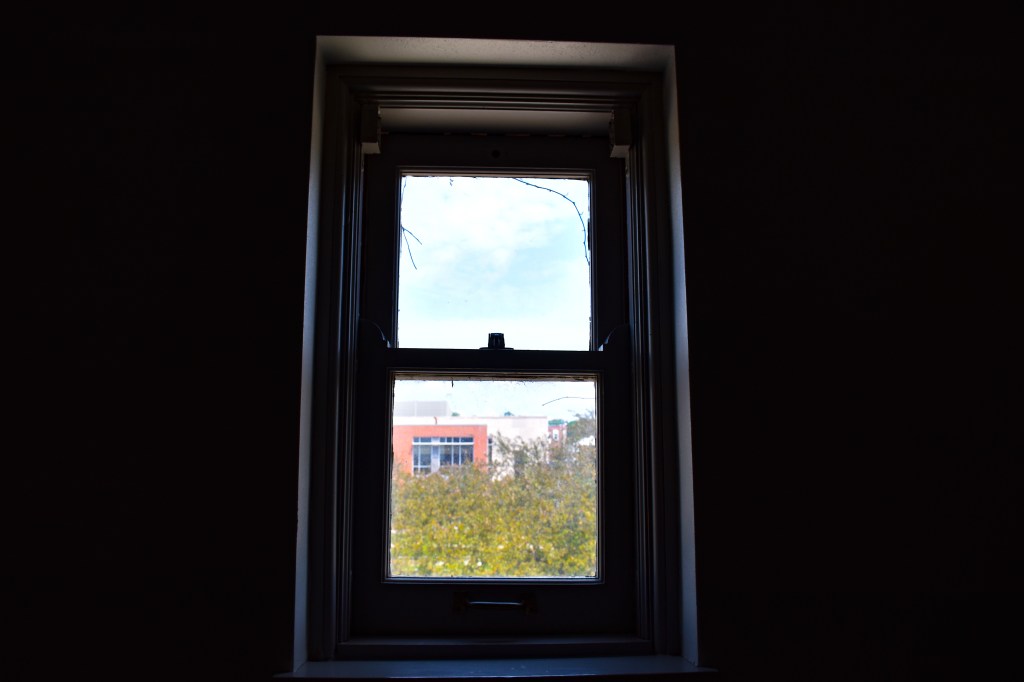
In the room I couldn’t quite go back to see, I took a class called, “Critical Reading” in the spring of 2011. Here, we discussed Plato’s Republic and Dante’s Inferno. I was a 19-year-old sophomore starting to find my voice, but I was still mostly quiet in these classes. I had so much social anxiety that I could probably recount all of–what I felt were–the dumb comments I made in classes throughout undergrad. I appreciated that my professor–the incomparable Dr. Ron Herzman–in this “Critical Reading” class, and many other professors, let me listen to them without the pressure of having to voice too many of my ideas aloud.
I grew so much as a student by listening here and trying to put what I was learning into the essays I got to write for these classes.
One of my favorite essays to write in college was in this class. I’ve forgotten the exact prompt, but I think we had to write about a time in our lives when we felt like sophists or stargazers, as described in Plato’s Republic. A sophist, as I recall, liked learning just to show off their knowledge. A stargazer though, liked learning for learning’s sake–for how it made their world larger.
I maybe took the stargazing ship captain metaphor Plato uses a bit too literally when I sat down to write this essay, but I found myself wanting to write about how my dad taught me how to drive in high school. The idea for the essay came to me as I drove through the night from New York to Florida with my dad over my spring break sophomore year in college. When it got dark and quiet as we drove through the night, I was reminded of the time he’d first really started teaching me to learn how to drive.
It was the summer before my senior year in high school. For those in the United States, you might recognize this time as the prime time to visit college campuses. So the summer before my senior year was filled with many road trips along what we in New York call, “the ninety,” (I-90), snaking through farmland, around rivers, and passing many trucks hauling goods.
So, as I was trying to figure out what the next step of my intellectual life would be by driving across New York state to visit college campuses, I was also learning the very practical skill of how to stay alive in a motor vehicle.
While I did manage to stay alive, I would end up wrecking my parents’ new car later that same summer. It’s funny, I looked back at my college “Driving Lessons” essay, and I never mention the accident. I jump from my dad teaching me how to drive that summer to the winter when I drove my mom back home in a blizzard after I did a college admissions interview. The point was that I’d learned enough to keep us safe on the road, and that I was moving even closer to embarking out on my own, I think. The second experience was supposed to highlight how I was becoming more of a stargazer, less of a sophist.
But I left out the car crash. And I left out how my parents helped me learn how to drive, again. I left out the struggle.
Another struggle I left out for a while was how the small, public, liberal arts college I attended and grew to love, was really never my first choice of college. I didn’t even get admitted to my first choice. And my second choice would’ve been too expensive even with scholarships. So, when I started college, I’d felt like I’d had to settle because I either wasn’t smart enough or rich enough to get into a more “rigorous” or “prestigious” school.
I’m glad I got over those feelings pretty quickly. It wouldn’t take long for me to realize that the school I’d at first felt I “settled for” was plenty rigorous, plenty challenging, and one of the most formative experiences of my life. I found a profession there, I found a love of science, and–most importantly–I got to explore every intellectual curiosity I had at the time with the support and kindness of some of the best mentors. My experiences reading poetry, history, and science–and trying to articulate what I understood of it all–were absolutely foundational in helping me arrive where I am now, on the threshold of getting to design my dissertation study in my PhD program.
I didn’t know all of this was happening at the time. I really had no idea. I had to have a kind of faith; I had to trust something I didn’t really know would come to be.
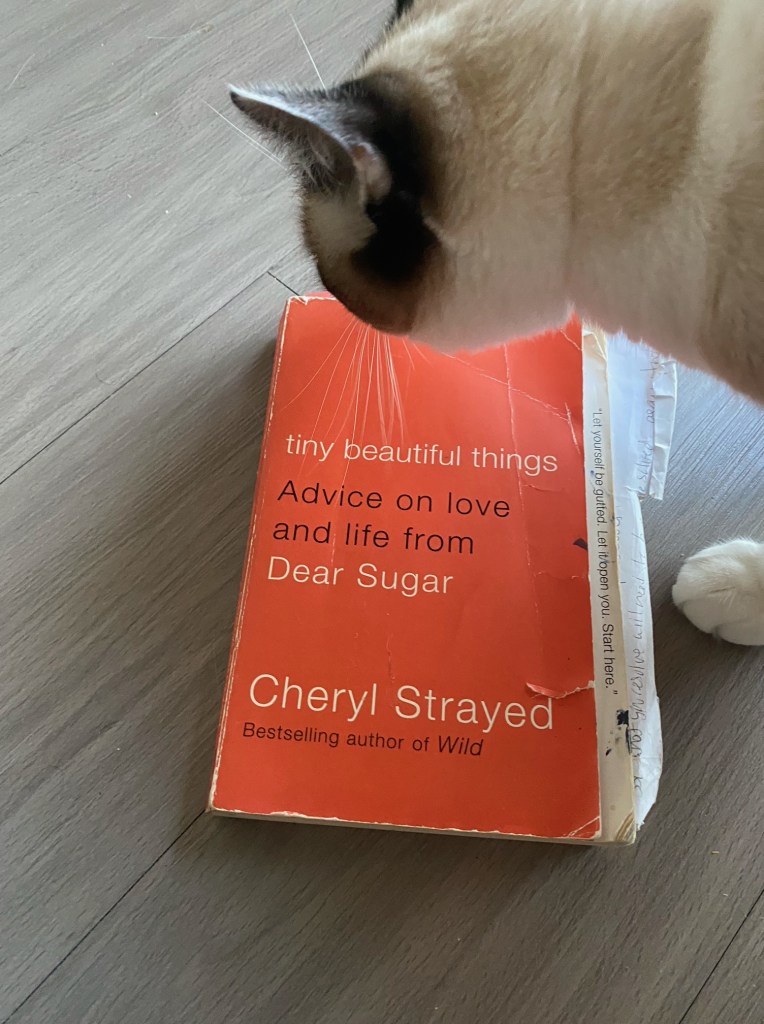
Near the end of college, a good friend introduced me to the writer, Cheryl Strayed. Her book of anti-advice columns is the closest thing to a religious text I’ve ever had. It’s worn and tattered and moved with me now for almost ten years. You’ll see a bit of navy paint on it in the picture above from when I used it along with a few of my other favorite books to prop up a step ladder to so I could paint the top of my walls in my first bedroom in Boston. Again, the metaphor wasn’t lost on me.
An essay of Strayed’s called, “The future has an ancient heart,” is one I have bookmarked and underlined. It’s right near the middle, just like the Psalms are in the Bible. I’d recommend reading it in full, but here’s a quote that I think might be able to tie together what I’m trying to say about what I’ve learned from where I’ve been, and where I hope to go as I start into the third year of my PhD program:
You have to pay your own electric bill. You have to be kind. You have to give it all you got. You have to find people who love you truly and love them back with the same truth. But that’s all.
Cheryl Strayed (aka Sugar), “The future has an ancient heart,” from the collection Tiny Beautiful Things
When I read the, “But that’s all,” in that quote, I found it to be one of the most freeing sentiments. It’s let me follow curiosities I didn’t know I had and form relationships with people I never would’ve been brave enough to talk to before.
Along with trying to give it all I’ve got this upcoming year (without drifting into burnout), I can’t help but think of how much gratitude I feel for my past teachers. So, I’ll leave you with this quote which I discovered in Lisa Congdon’s Whatever You Are, Be a Good One:
“I can no other answer make but thanks, and thanks.”
William Shakespeare, or Sebastian in Twelfth Night


