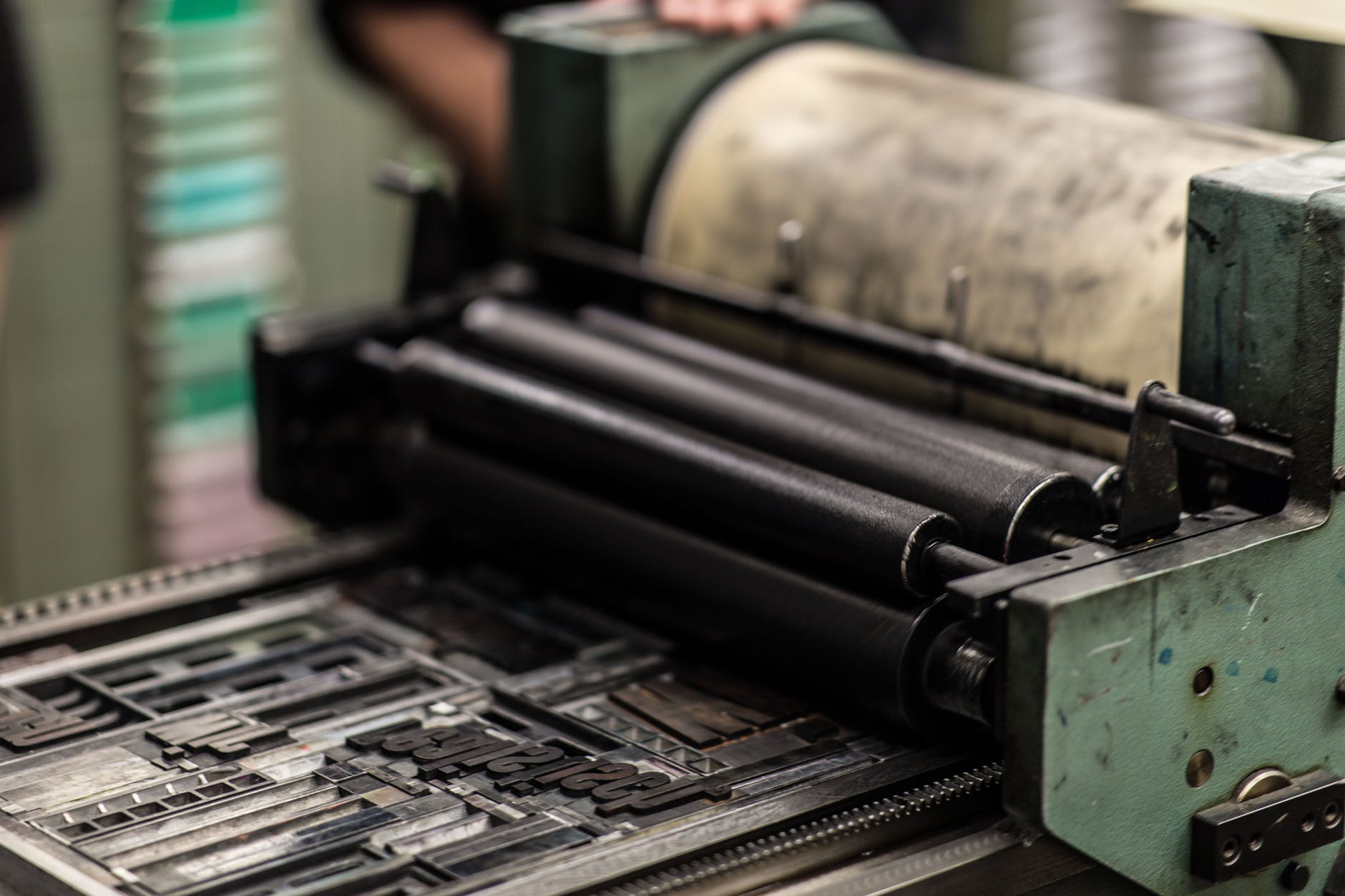
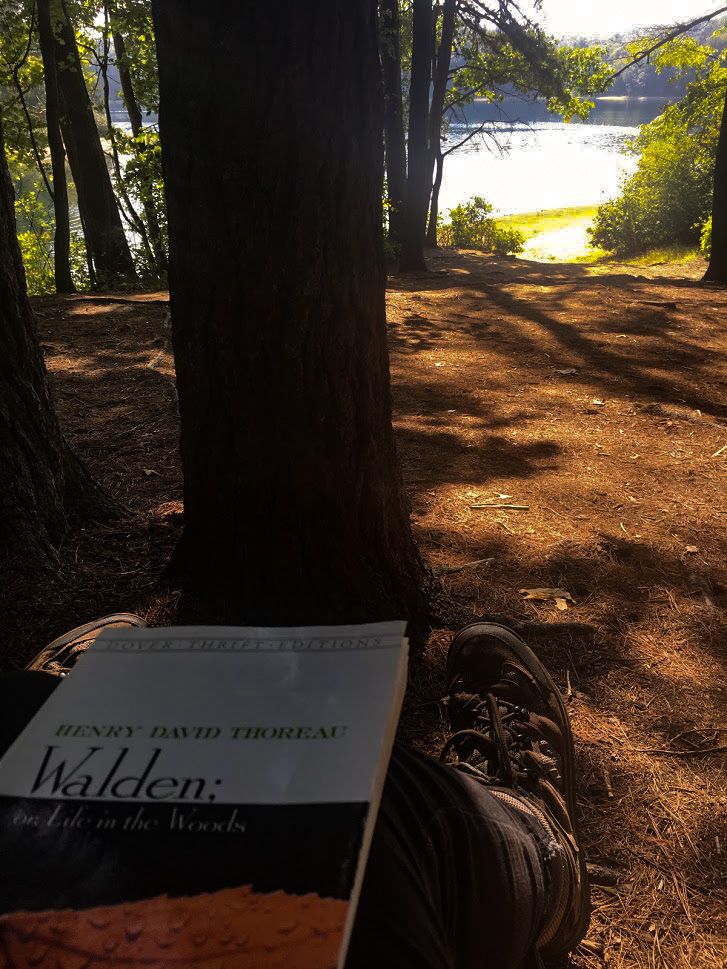
“Our inventions are wont to be pretty toys, which distract our attentions from serious things.”
Henry David Thoreau, Walden
Earlier this year, I wrote about one of the ways I’ve tried to solve the problem of starting at my laptop screen too much. I decided to buck the high-tech trend of reading on a screen and chose to buy a printer. During the prior fall semester, I tried to read everything on my laptop, but with so much else of my day on the computer, I was clocking the vast majority of my waking others in front of a screen. I know this has been the case for many others through the pandemic. And I know I’m in a privileged group of people who can (1) actually take some of their work offline by reading in a book or on printed paper and (2) can afford to buy a printer (thanks boyfriend for going in on this purchase with me).
The journey toward getting the printer led me down some roads where I reminisced about the weird, almost liminal space my generation—millennials—have grown up in in pre- and post-internet technology times.
The first time it really sank in was in a class I took in college where we talked about technology in education. We read an article about the growing use of cell phones—written in 2012. While there’s lots to unpack about that article, I’m remembering the discussion in our class focused on how our generation—this was a class full of millennials—occupied the border space between the old and new technological worlds. Yes, we “grew up with the internet,” but the internet wasn’t nearly as developed as it was when we were young. So it just wasn’t worth our time to spend all of our lives on it, so we still went outside, road our bikes up and down the street, and went fishing in a nearby pond (not Walden pond, ha).
While yes, we were raised with internet for the most part—it didn’t look at all like it does now in the early or even late aughts. It was characterized by using AOL instant messenger, designating our “top eight” on our MySpace pages, poking people on Facebook, uploading pictures to Photobucket, finding basic HTML-written recipe blogs with one low-quality picture, and discovering new websites via the “stumbleupon.com” plugin.
Yes, the internet could take up a lot of your time, but it wasn’t perhaps the vortex it is now.
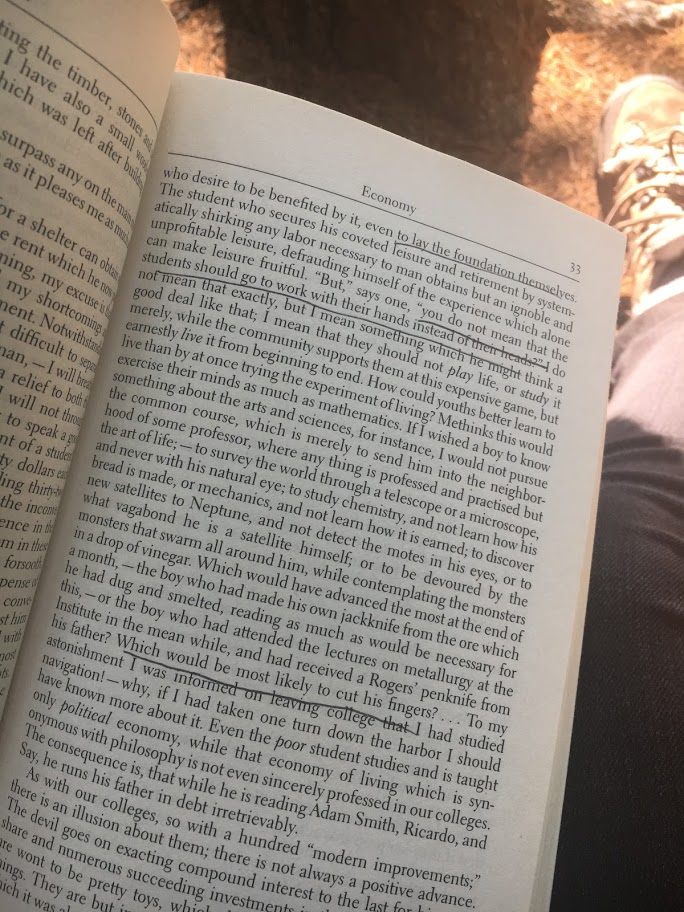
But at the same time I was introduced to the growing internet in college, I was also still reading out of physical books and taking handwritten notes alongside (and sometimes, yes, in) my books. In my notebooks for each course, page numbers of the text filled the space to the left of the margin, my notes to the right. So while I’d perhaps type a paper or a lesson plan on the new shiny laptop my parents got me for college, much of my work was still analog—something that also helped tremendously with my easy distractibility.
It was in revisiting this way of doing things—how I’d taken notes as an undergrad—that brought me back to reading and writing less on a computer.
With the start of the spring semester, I started a general rule for myself that any work I’d do in the evening had to be on printed paper or in a book. And I have to say, I love this ritual. I put my laptop away at the end of working in the afternoon, and I take out a book or a printed article and set it to the side to read in the evening. This is also the time when I usually go for a walk outside. The walk serves as a nice buffer between the high technology part of the day and the low technology evenings.
And I have to say, I am really loving reading words on paper, again.


